Eubank Jr. versus Benn summons Middleweight debate

Article first appeared at Roundtable Boxing

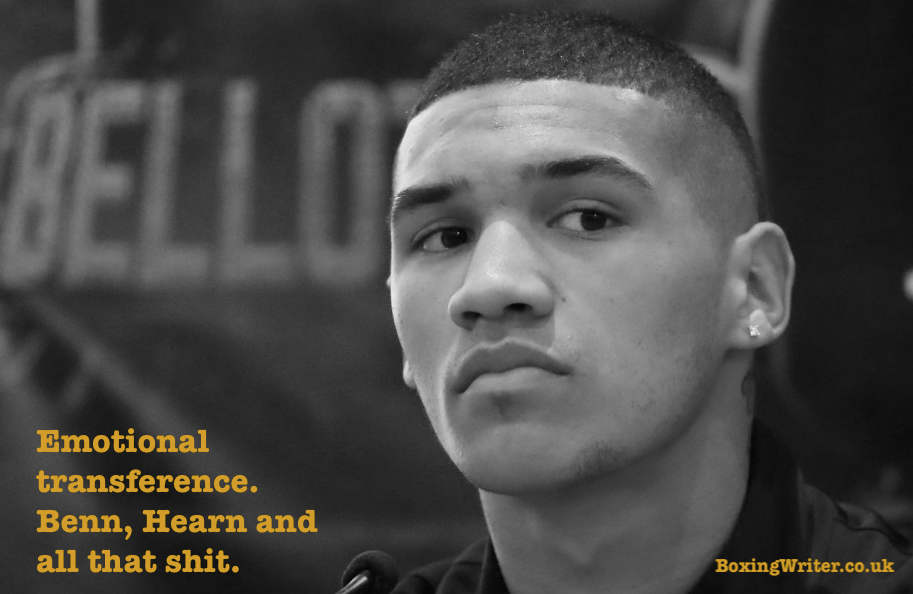
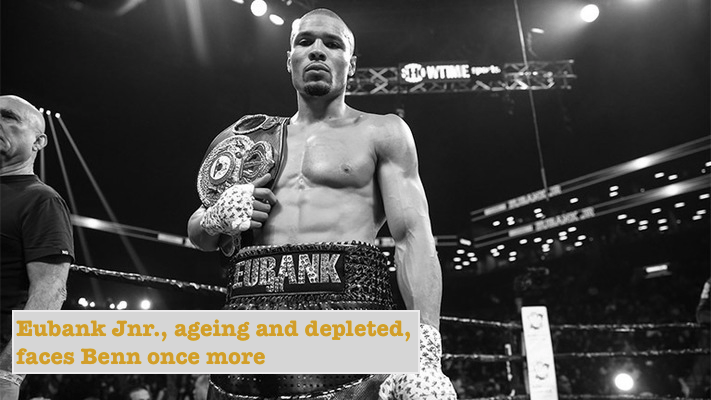
On Saturday night, Conor Benn, he of the chequered relationship with the sport’s barely imposed confines, will box for the second time as a Middleweight in his rematch with Chris Eubank Jnr.  The fixture will require of the 35-year-old Eubank, who clearly won their first encounter, another brutal purge of his frame to dip down to 160 pounds however fleeting the visit will be. 

The classic weight class has provided a platform for a parade of great fighters from the UK. Many of whom have progressed to achieve ever more on the world stage at the neighbouring Super-Middleweight division – not least Benn and Eubank’s fathers, Nigel and Chris Snr., thirty years ago.

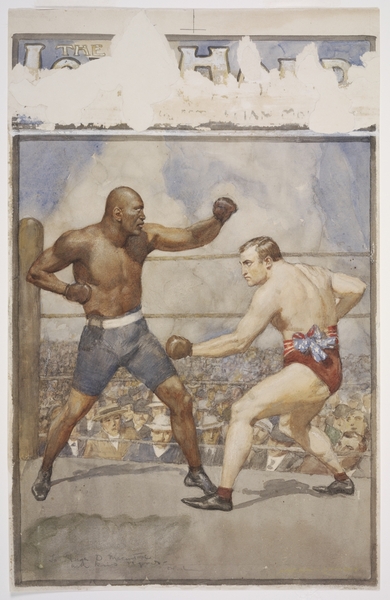
Ranking those who boxed in the Middleweight division will always be clouded by the accomplishments in the neighbouring weight classes and as such, any listing of the best is a difficult undertaking.  It is an opinion not a science, but here are three of the best Middleweights from the UK, with apologies to Bob Fitzsimmons – more famous for his accomplishments at heavyweight, Terry Downes, Alan Minter (who, like Fitzsimmons, won a World Title at Middleweight) and Tony Sibson, among many other distinguished omissions.

Continue reading “Eubank Jr. versus Benn summons Middleweight debate”

Boxing bullied out of the Kinahan business on eve of Fury versus Whyte

“I think crime pays. You travel a lot.”

Woody Allen

Fighters always attract a troupe of colourful characters. Their money, and their potential to be parted from it, even more. Sycophants. Chancers. Criminals. Sugar Ray Robinson, the greatest of them all, engaged a parade of the bizarre and the harmless. From a person with Dwarfism, employed for no discernible reason beyond the novelty of their height, to a pair charged with whistling while the shimmering Robinson worked – if Gilbert Rogin’s obituary of April 24th 1989, by way of coincidence, is to be taken as a gospel of the period.

The great man danced in an era in which dressing room visitors were far from harmless, and in a shady world where the advice of ‘advisors’ was always followed. Boxing’s enduring chaos is fertile territory for organised crime. In the 1950s, a period oft considered a golden age, the Mob were manifestly the king makers within the sport.

On the eve of the heavyweight title fight between Tyson Fury and Dillian Whyte, Daniel Kinahan’s growing influence within boxing’s many lucrative shadows, including a documented advisory capacity in Fury’s later career, has finally been arrested.

If not the man himself. It is a story perhaps only at its beginning.

Continue reading “Boxing bullied out of the Kinahan business on eve of Fury versus Whyte”

Not fighting; the new fighting

In my preparation of notes for this weekend’s clash between Welterweights Keith Thurman and Josesito Lopez I was struck by the inactivity of both men; Thurman returns from a prolonged sabbatical following elbow surgery and Lopez fights for the first time in almost a year. As the attraction in the fight, Thurman’s absence has been well documented and largely explainable but their respective inactivity is reflective of a broader trend in boxing, particularly among those who have punched and parried their way to the top of their division.  

Not fighting has become customary. This ‘resting’, as old thespians may have once termed these periods of unemployment, is a point of frustration for many of us who remember a time when champions and contenders fought three, four and more times per calendar year. True, training has evolved. Accruing new voices from the doctrines of science, nutrition as well as a disparate parade of sorcerers and snake oil salesman from the grey-scale in between. A boxer’s ‘camp’ has now become an umbrella beneath which this entourage of analysts and soothsayers restore the abandoned physique to optimum and, in doing so, too frequently devour large swathes of calendar too.   Continue reading “Not fighting; the new fighting”

The night the Raging Bull, Jake LaMotta, fell

Deep as first love, and wild with regret;
O Death in Life, the days that are no more
Alfred Tennyson, poet 1809-1892, The Princess (1847)

No hush fell beneath the domed ceiling of the Miami Coliseum on New Year’s Eve 1952. Drawn to party, the event, the crowd seemed neither stunned nor charged by the sight of former Middleweight champion and boxing superstar Jake LaMotta slumped to the canvas for the first time in his then 103-fight career. Referee Bill Regan, a Welterweight now broadened by twenty years of retirement, took up the count. LaMotta, 31 and fighting at a career high of 173 pounds, pawed for the bottom rope with his right hand as Regan loomed in.

Opponent Danny Nardico rushed to a corner, the adrenaline racing through his body. The enormity of what he’d just done with a thunderous cross-cum-hook, the last of a flurry of clubbing shots, writ large before him.

Continue reading “The night the Raging Bull, Jake LaMotta, fell”

Link: Jake LaMotta speaks to the Scotsman


‘Raging Bull’ LaMotta hits out at demise of boxing

I never tire of hearing the opinions of boxing’s grandmasters and the ‘Raging Bull’ is one of the last remaining voices from the era in which he excelled. Tim Gaynor of the Scotsman has taken the time to ask Jake his opinions on the current state of boxing, his view on the rise of UFC and his own motivations and methods as a fighter. Of course, for fervant boxing fans some of the content is familiar ground and the famous ‘diabetes’ line he enjoys reciting to summarise the frequency with which he met nemesis Sugar Ray Robinson has another airing, but his opinion remains relevant and interesting. Click on the image above to read Tim’s interview.

Continue reading “Link: Jake LaMotta speaks to the Scotsman”

A WordPress.com Website.

Up ↑

Design a site like this with WordPress.com
Get started